
Understanding Visual Storytelling
Images have the power to shape how we see the world and ourselves. Every image, whether a painting, a photograph, or a film still, carries a narrative told through its details. Factors like lighting, composition, posture, and expression all become tools that allow viewers to recognize emotion, status, and intention.
The concept of visual storytelling reaches far beyond what we might initially imagine. Humans have long used images to share their stories, from cave paintings as early forms of communication to illuminated manuscripts and, more recently, modern photography and graphic design, as explained on the History of Visual Communication website. These images do way more than record events or the people in them; they shape perception, illustrate our values, and communicate identity and status without words.
Royal portraits, photographs, and other carefully composed images demonstrate that identity and power are inseparable from the way they are presented. Across centuries and media, visual storytelling transforms individuals into symbols and authority into art.
Queen Elizabeth I – Armada Portrait
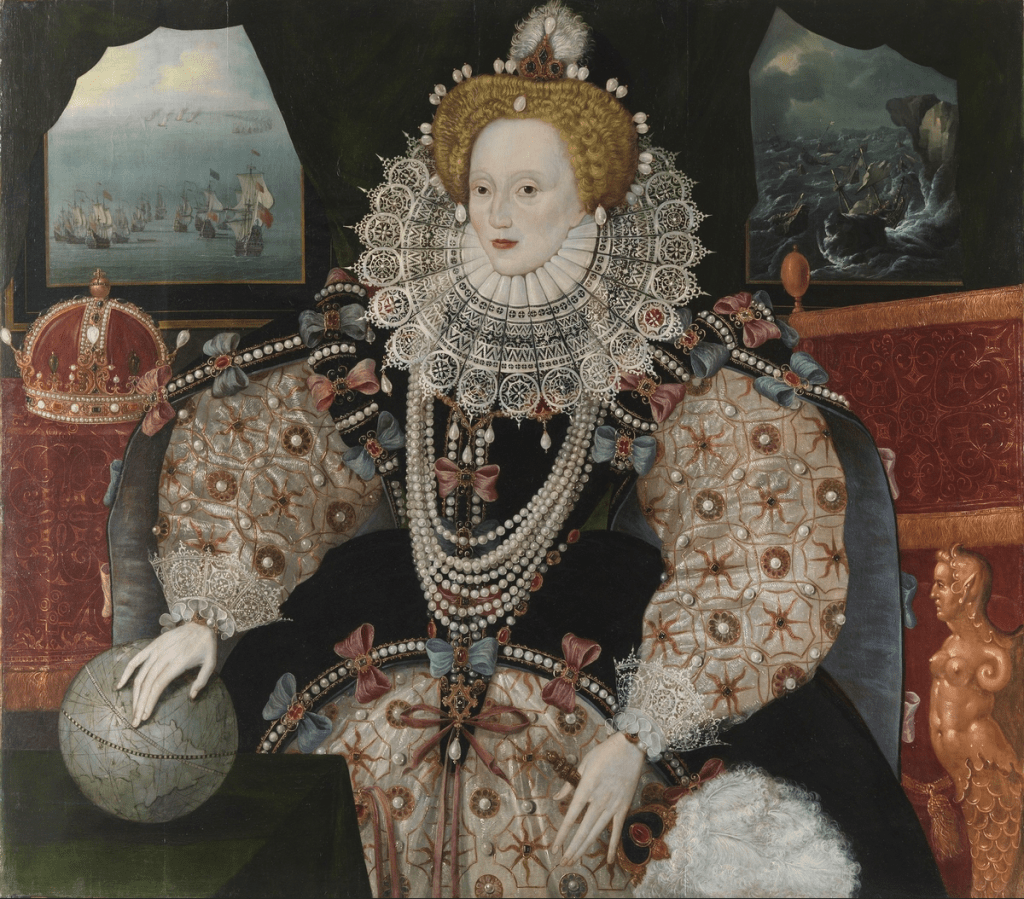
The Armada Portrait of Queen Elizabeth I demonstrates how careful visual construction conveys authority. Her hand rests on a globe, signaling her awareness of international affairs, while the pearls on her gown emphasize her wealth and status. In the background, the sinking ships of the Spanish Armada fade into the distance, reinforcing England’s triumph and her power as ruler.
There is also a clear color contrast between the foreground and background. Elizabeth is depicted in the foreground wearing rich reds and golds, colors that signify royalty and wealth, while the background remains dark and muted, emphasizing the threat and uncertainty represented by the fading Armada.
At first glance, it truly is an amazing portrait, but looking more closely, we can see that each detail guides our understanding of Elizabeth’s identity and influence. Compelling visual storytelling relies on the careful arrangement of elements to guide viewers’ perception, making sure that every visual choice contributes meaningfully to the overall narrative. Her neutral, distant expression shows her control and power, showing how visual storytelling communicates authority without words.
Louis XIV – Portrait by Hyacinthe Rigaud
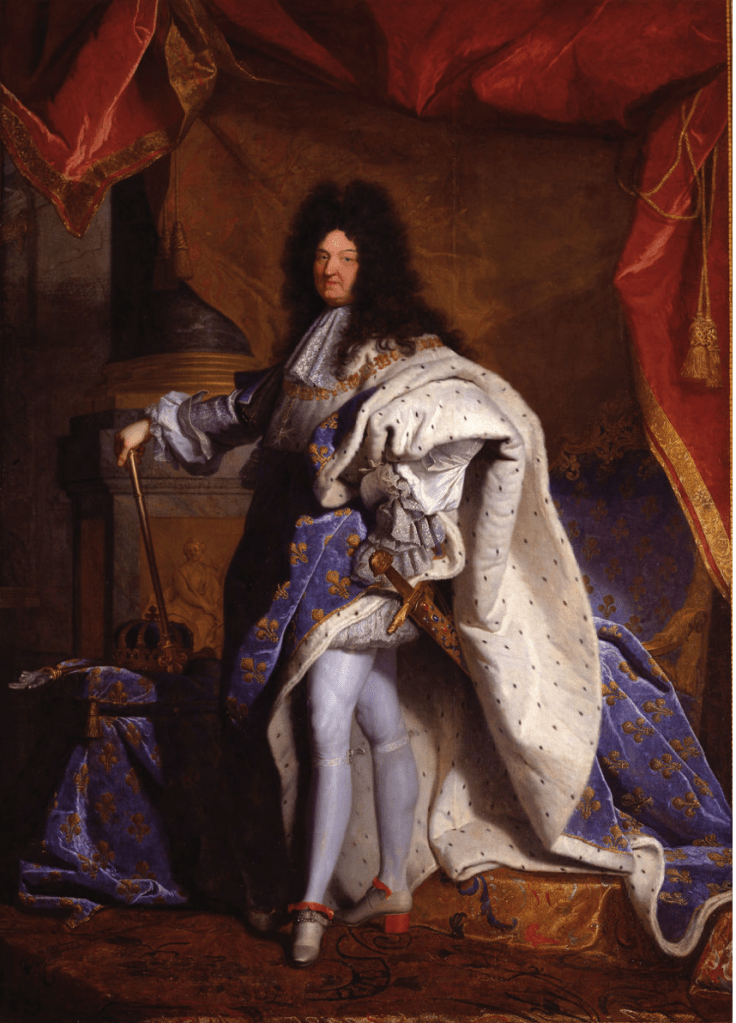
While Elizabeth’s portrait shows her power through careful details and symbolism, a hundred years later, Louis XIV’s portrait turns authority into a full-on show. Rigaud adds a whole new layer of theatrics, emphasizing his power within the monarchy through body language, posing, and elaborate surroundings.
In Hyacinthe Rigaud’s portrait, Louis XIV really takes over the frame with his pose, fancy clothes, and the big columns around him. His silk and gold robes and the way he is positioned make you look up to him and show that he is in charge. As mentioned previously, with Queen Elizabeth, there is also a specific color scheme that remains apparent across portraits, this time now including a royal blue robe
Every part of the painting works together to show who he is and what he represents. The details are not just decoration; they were deliberately intended to make viewers feel a certain way. They turn him into a symbol of power and show how rulers use artistic techniques to communicate authority to make themselves look important.
Napoleon Crossing the Alps – Jacques-Louis David
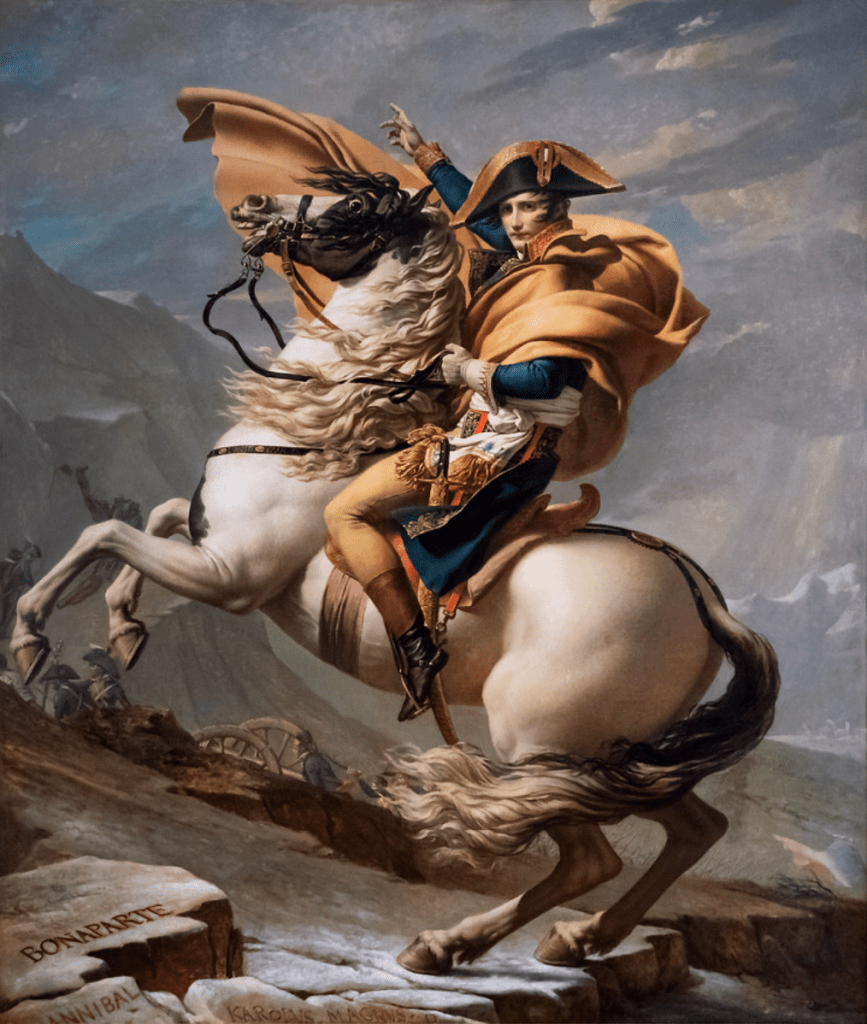
Napoleon’s portrait tells a story through action and composition. In Jacques-Louis David’s Napoleon Crossing the Alps, Napoleon is shown on a rearing horse, pointing forward with determination, with his cloak and the rugged mountains around him adding drama and movement. Every part of the painting works together to communicate his identity as a strong and decisive leader. The gesture of his hand, the angle of his body, and the steep landscape all highlight his courage and control, showing how artistic choices can shape the way we perceive power.
From a storytelling perspective, David uses these visual elements to make Napoleon feel heroic and legendary, showing that power can be expressed not just through wealth and symbols but through presence and action.
Queen Victoria – Franz Xaver Winterhalter, 1843
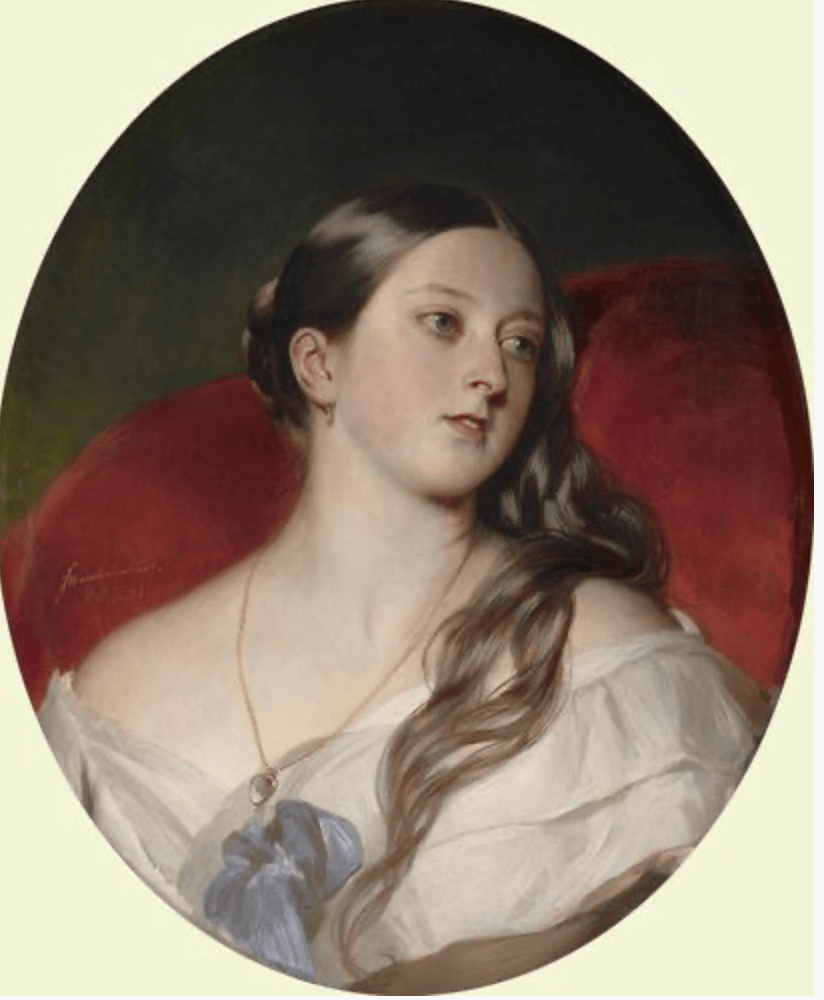
Moving forward in time, Queen Victoria’s portraits show a very different kind of power compared to Napoleon’s dramatic and action-filled image. In Franz Xaver Winterhalter’s 1843 painting of Queen Victoria, she is shown in a calm and elegant setting, surrounded by soft light, lace, and flowers, as seen in the Royal Collection. Every detail in the portrait tells part of the story, from the delicate fabrics to the gentle lighting, showing how subtle visual choices can communicate authority and identity.
Her lace dress and delicate accessories highlight her refinement and attention to detail, while the softer lighting draws attention to her face, emphasizing her poise and dignity. The flowers and gentle colors in the background create a sense of warmth and approachability, inviting the viewer to connect with her both as a person and as a monarch. This is different from many other royal portraits, where the subject is intentionally distant and separated from the viewer to emphasize authority and formality.
Winterhalter’s careful use of composition, color, and texture guides the viewer’s focus and communicates Victoria’s identity subtly but clearly. From a storytelling perspective, the painting shows that authority does not always need to be loud or dramatic; it can be expressed through grace, restraint, and careful presentation.
Queen Elizabeth II – Coronation Photograph by Cecil Beaton
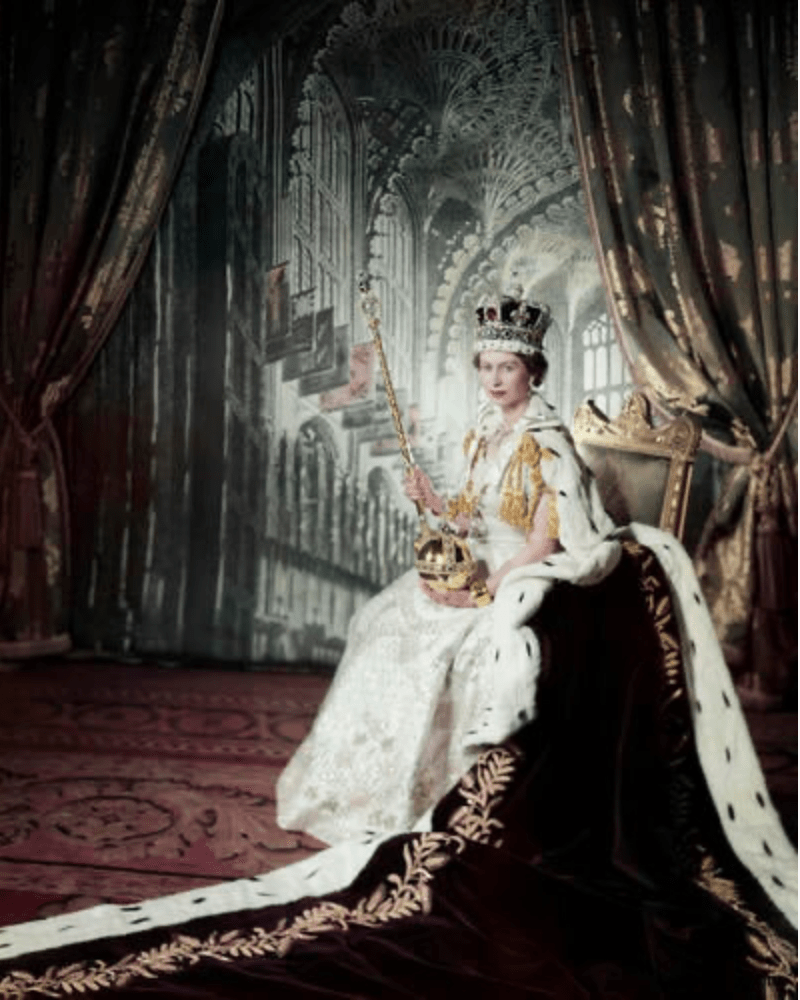
After Queen Victoria’s more gentle portrait, Cecil Beaton’s 1953 coronation photograph of Queen Elizabeth II shows how royal authority moves into the modern era. Unlike older portraits, this photograph uses composition, lighting, and carefully chosen details to tell a story of power in a way that resonates with mass audiences, as described on HubSpot’s visual marketing site.
Queen Elizabeth sits on a grand throne, wearing her coronation robes with the Imperial State Crown on her head. The throne is set against an incredibly decorated background, which makes her look even more important and creates a formal, royal atmosphere. The lighting highlights her face and clothing while leaving the background darker, which draws the viewer’s eye to her and emphasizes her central role. This also suggests the idea of her being “illuminated” as the new monarch.
She is sitting with a straight, confident posture, looking into the camera to connect with the viewer while maintaining her dignity. One hand rests on the throne, and the other holds the scepter, showing her control and readiness to lead. Every detail, from her crown to the texture of her robes, reinforces her power and tradition. This careful use of posture, symbols, and details is a pattern that can be seen across many royal portraits.
Princess Diana – Portrait by Mario Testino
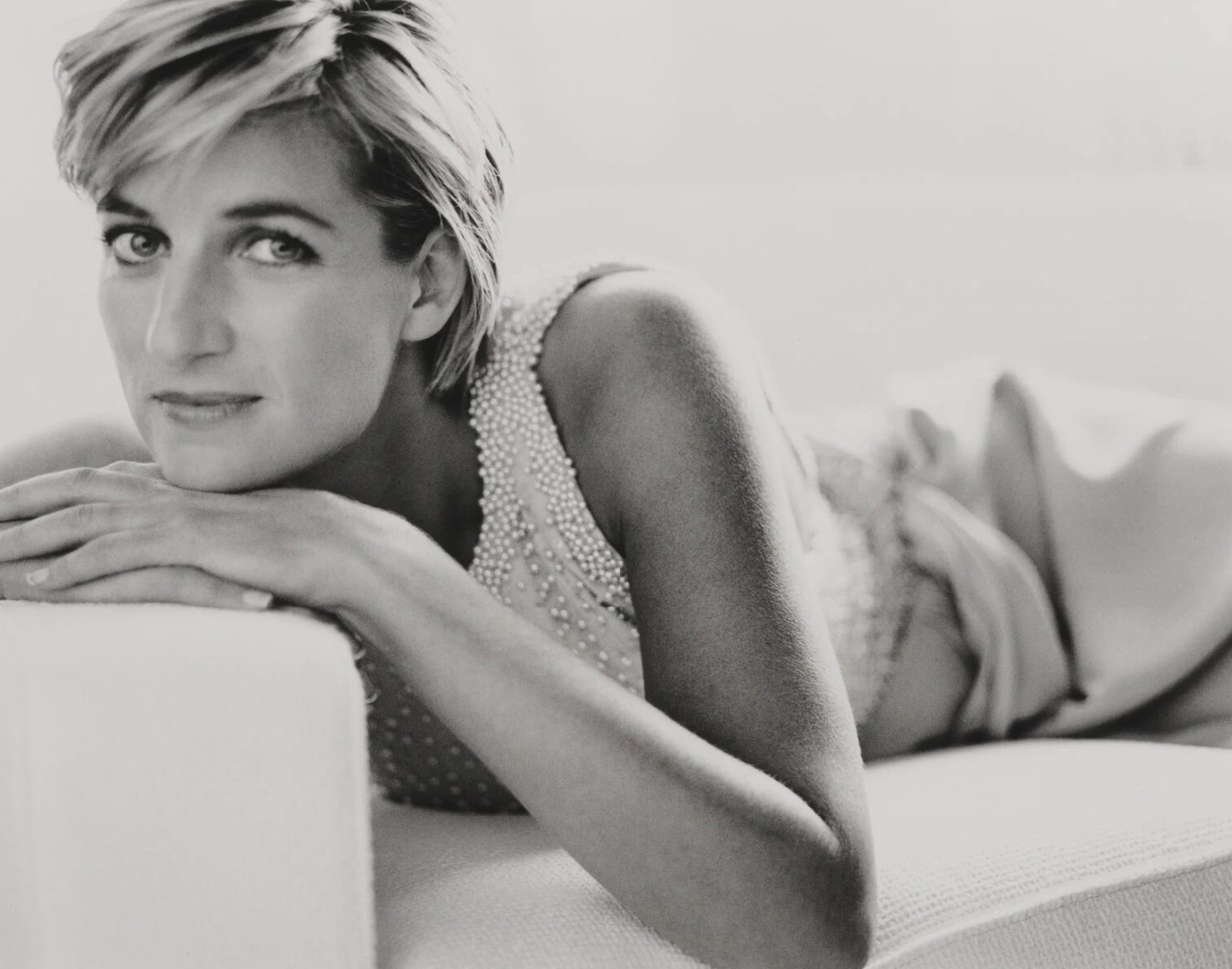
Mario Testino’s portrait of Princess Diana marks another massive shift in how royalty is presented, moving far away from formal authority and toward authenticity and personal connection. Her posture is open and relaxed, with her shoulders slightly turned and her hands gently placed, which immediately makes her appear more approachable. Her expression is soft and sincere, with a hint of a smile, allowing viewers to sense her warmth and humanity rather than just her status.
The lighting is bright and even, highlighting her face and creating a sense of intimacy, while the background is kept simple so nothing distracts from her presence. Even smaller details, like the texture of her clothing and the way her hair frames her face, are carefully composed to make her seem relatable yet still elegant.
This vulnerability and openness become a kind of power in themselves, showing that identity can be communicated not only through symbols of authority or wealth, but through emotional connection and authenticity. The portrait invites viewers to see Diana not just as a princess, but as a person, demonstrating how visual storytelling can use posture, expression, and composition to make someone both approachable and memorable.
King Charles III – Portrait by Jonathan Yeo, 2024
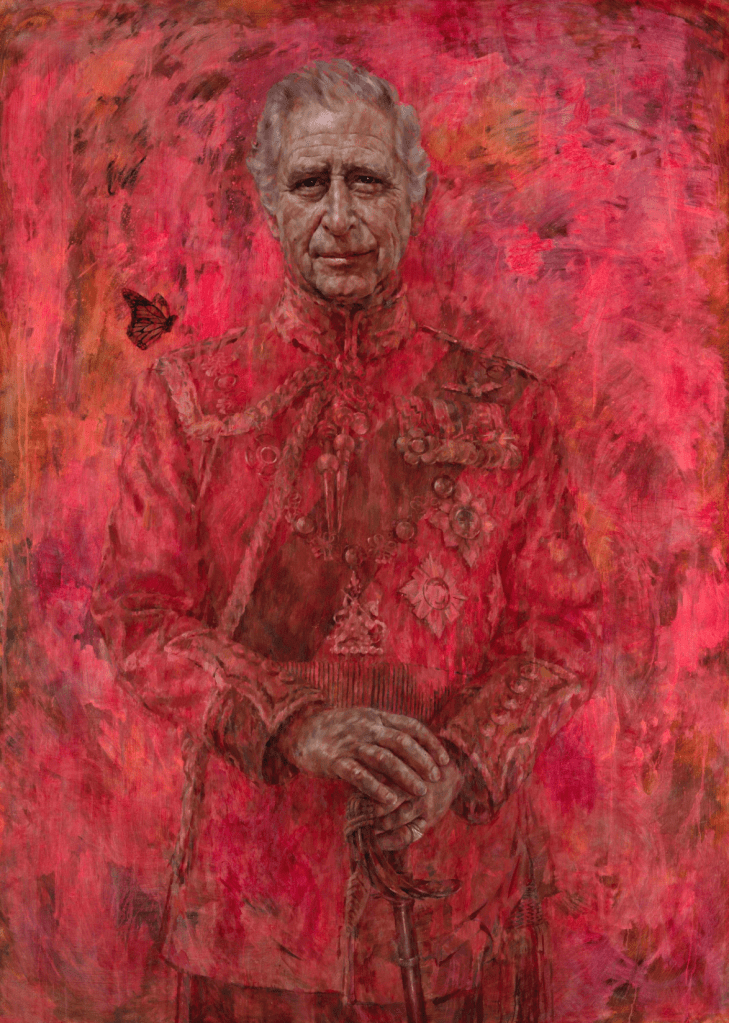
Jonathan Yeo’s 2024 portrait of King Charles III seems to show royalty in a new way compared to the previous portraits. This time, texture is used as a way to emphasize his presence, with bold brushstrokes, blurred details, and a thoughtful pose instead of the usual crowns or thrones. He is placed against a background of strong red brushstrokes that feel energetic and emotional.
The medals on his chest are blurred, which may suggest that his achievements are important but not the main focus of the image. His expression looks calm and reflective, which makes me think about the responsibilities he carries as king. The way he is slightly off-center and surrounded by the abstract strokes could also signify that identity and power are not only about traditional symbols but also about personal strength and character.
Every choice, from the colors and brushwork to the focus on his face, seems to tell a story about him as both a person and a monarch. This portrait makes me realize that even today, visual storytelling can communicate both authority and the more personal, human side of leadership.
Final Thoughts
Looking at all of these images together, one idea really stands out. Every little detail, from the way someone stands or looks, to the objects around them and the colors used, helps tell a bigger story.
Visual storytelling can turn a person into a symbol, make authority feel like art, and turn a single moment into something we remember. When we pay attention to the details, we can start to see how power is shown and how identity is built. Images are never just decoration or something to look at. They tell a story all on their own, and they can teach us a lot about the people, the time, and the ideas they represent.
 A Master in the Making
Leave a comment