Summary
This module gave me a much better understanding of what goes into planning and producing a strong podcast. Through the readings and research, I learned how much structure and preparation affect a podcast’s final outcome. I also realized that things like testing equipment, setting levels, and planning out each element ahead of time make a huge difference in how professional and engaging a project sounds.
Looking at different examples of well-produced podcasts helped me think about what keeps an audience interested and how tone and pacing can shape the listening experience. I was able to use some of the podcasts I already enjoy in my free time to get a better sense of what makes one really stand out and feel strong from start to finish.
Completing the pre-production planning document made the whole beginning process feel a lot more organized and achievable. Once I had a main idea, it became easier to fill in the details and picture how everything would come together. After going through this module, I feel much more prepared to start creating my own podcast. I now have a clearer idea of how to structure it and am excited to get working on producing my ideas.
Reading & Writing
The Bare Bones Camera Course for Film and Video (Chapter 8 – Sound)

In The Bare Bones Camera Course for Film and Video by Tom Schroeppel, Chapter 8 focuses on the importance of sound and how it shapes the viewer’s experience. Schroeppel discusses how sound is just as crucial as visuals, since clean and intentional audio helps in engaging the audience rather than distracting them.
He also discusses different types of microphones and how they are used, such as lavalier mics for capturing close, clear voices and shotgun mics for more flexibility. The chapter highlights the importance of choosing the right microphone based on what the audience needs to hear and monitoring for unwanted noise during recording.
Another major takeaway is that voices, sound effects, and ambient noises should be recorded cleanly and separately to maintain flexibility during editing. I learned that sound should be treated as an active part of storytelling, not just a background element. Planning ahead, testing equipment, and recording with clarity in mind all contribute to a stronger final product.
The Invisible Podcast Script
The article “The Invisible Podcast Script,” by Kevin Anderson, explains that even podcasts that sound completely natural often rely on careful planning to maintain flow and direction. It highlights how having a clear structure or outline helps hosts stay organized and confident while recording, even if the audience never realizes a script exists.
The article emphasizes that preparation plays a huge role in keeping the conversation engaging and on track. When episodes are thoughtfully planned, it allows the dialogue to move smoothly and naturally from one topic to the next, creating a better listening experience and helping the host stay focused throughout the recording process.
From this reading, I learned the value of planning episodes in advance. Having a simple structure with an intro, main discussion, and closing section can help make a podcast feel a lot more polished while still authentic and conversational.
Creating a Great Podcast Script: 3 Methods Top Podcasters Use
In the article “Creating a Great Podcast Script: 3 Methods Top Podcasters Use,” the author Colin Gray breaks down three common ways to plan a podcast: a full script, a detailed outline, and a loose bullet-point guide. Each method offers different levels of control and creativity.
The first approach is the word-for-word podcast script, where everything spoken on the episode is fully scripted in advance. While great for shaping a good episode, this is a highly timely process and can make the tone of voice sound one note. In contrast, the third approach uses little to no script at all, relying on a bulleted list of reminders to fill in any gaps as needed.
Personally, I think the second option would work best for me when planning a podcast. This approach uses a structured outline with key talking points rather than a full script, giving some direction without over planning. It makes a good balance between structure and spontaneity, allowing me to stay organized while still sounding natural and conversational. If I were to read directly from a script, I’d probably lose focus on my tone and personality, but without any kind of outline or bullet points, let’s just say my ADHD would definitely make it harder to stay on track.
Taking the time to outline ideas and structure conversations not only keeps the content focused but also makes the overall recording process feel smoother and less stressful.
Podcast Taglines, Hooks, and the Power of Words
The article “Podcast Taglines, Hooks, and the Power of Words” focuses on how effective language and phrasing can impact your podcast’s identity. A good tagline or hook quickly tells listeners what your show is about and why they should stay.
The author suggests crafting a tagline that’s simple, specific, and memorable, often in two parts: one that introduces who you are and another that highlights what value you bring. The words you choose shape first impressions and build long-term connections with your audience.
A strong hook and tagline can help capture attention, set expectations, and make a podcast feel professional from start to finish. They can also help build consistency by repeating phrases in key sections across podcast episodes.
Best Podcast Tools of 2025: Make, Market, and Monetise Your Show
In the article “Best Podcast Tools of 2025: Make, Market, and Monetise Your Show,” by Matthew McLean, he highlights some of the best tools out there for recording, editing, hosting, and marketing your podcast. He mentions that creating great content isn’t about having the most expensive setup, rather it’s about choosing tools that work for you and help bring your creative process to life.
Programs like Alitu for editing, Podpage for website building, and Beehiiv for newsletters are highlighted as excellent tools for creating and maintaining a podcast. McLean encourages using resources that are easy to work with, so creators can spend more time and energy focusing on producing quality content rather than struggling with technical challenges.
This article helped me better understand that the best tools are those that help me stay consistent. Rather than trying to create an environment I deem more “professional”, I should focus on building comfort and efficiency with what I already have access to.
Podcast Presentation Skills: Honing Your Speechcraft
In the article “Podcast Presentation Skills: Honing Your Speechcraft,” author Robert Cudmore explores how a host’s delivery can make or break a podcast. It highlights tone, pacing, and clarity as key elements that shape how listeners perceive you.
The article suggests speaking as if you’re talking to one person, avoiding a robotic tone, and practicing varied pacing to keep your audience engaged. It also covers tips for interviews, improvisation, and managing nerves while recording.
I learned that great content is only effective if it’s presented well. Practicing my tone, pacing, and confidence will help me sound more natural and engaging. Building these habits early will make future recording sessions feel smoother and more authentic.
Research to Inform
After doing some research and reflecting on podcasts I’ve listened to in the past, I found a few that do an excellent job of engaging and connecting with their audience. These are all shows I personally enjoy, so I do admit there might be a bit of bias here.
- https://open.spotify.com/episode/3JoG7xWZHkKqfvilmiFHoF?si=0635e68528bd490c
- The link above is to the podcast titled Call Her Daddy, the episode is titled “KIM KARDASHIAN”
- Alex Cooper, the host of the podcast Call Her Daddy, has become a huge name in the podcast world. Her popularity has grown even more as she’s managed to bring on major celebrities for interviews. The episode featuring Kim Kardashian stands out to me because of how naturally Alex is able to balance curiosity and comfort, creating more of an honest and open conversation. Kim talks about topics that feel personal but still polished, and Alex’s interviewing style makes it easy for listeners to stay engaged from start to finish. What makes this episode especially engaging is how it feels less like a traditional interview and more like two people having a genuine, unfiltered conversation. The way Alex builds trust with her guests allows moments of vulnerability and humor to shine through, which keeps the audience hooked.
- https://www.youtube.com/watch?v=u4DoKjuHrX0&list=PLpZFQCvquZYYeTRvZSEiSRWsg-X5UF22r&index=64
- The link above is to the podcast titled Cancelled, the episode is titled “Matt Rife is CANCELLED… again”
- Hear me out on this one… I think the Cancelled podcast is pure gold. Not just because it’s two Gen Z hosts talking about pop culture I’m into, but because they’re completely unbothered by the idea of being dragged by their audience. Tana Mongeau, the host, has been canceled so many times that it barely even phases her anymore. Similarly, her co-host Brooke Schofield isn’t afraid to say what she really thinks. Together, they share stories that are raw, chaotic, and hilarious, but somehow still feel real and relatable. There is something refreshing about how unapologetic they are because they never try to filter themselves to fit a certain image, which makes listening to them feel like catching up with friends who always say what everyone else is thinking. That being said, I think they often are dealing with drama and other problems as a result of their gossip spilling.
- https://www.youtube.com/watch?v=foxXZY8PU9E
- The link above is to the podcast titled Therapuss, the episode is titled “Session 86: Selena Gomez”
- This podcast is hosted by Jake Shane, a social media influencer known for his humor and relatable personality. He has a natural and engaging way of connecting with listeners. What makes Therapuss stand out is how well-structured each episode is. Jake keeps a clear flow throughout the conversation, starting with light, funny moments before gradually moving into more reflective topics. This balance makes the podcast both entertaining and meaningful. In the Selena Gomez episode, he maintains that same rhythm, creating a conversation that feels genuine and easy to follow. Another aspect that makes this podcast so engaging is the segment Jake includes at the end of every episode, where he answers questions submitted by listeners through his website. It adds a consistent and interactive element that helps the audience feel involved and keeps them coming back each week.
Create
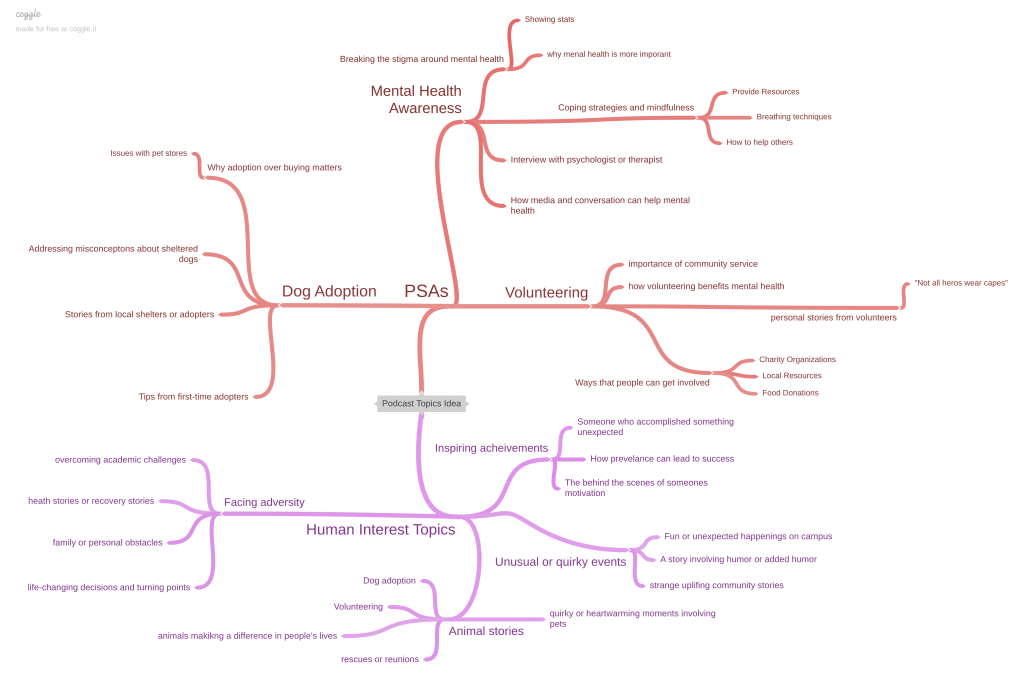
Here is my mind map on PSAs and human-interest topics. I used the map to help me come up with the topic for the podcast I will be working on.
Here is my Pre-Production Planning Document:
At first, I was a little unsure about when and how to use the mind map, so I ended up using it as a way to brainstorm my overall topic. I listed out a few different PSA and human-interest ideas before narrowing it down. Once I started connecting ideas visually, it helped me see what direction made the most sense.
Going through the pre-production planning document ended up being much simpler than I expected. Once I figured out the main concept of what I wanted to focus on, the rest of the sections came together pretty naturally. I decided to base my project on the theme of facing challenges, because I think it’s something everyone can relate to in different ways, and it leaves room for both humor and honesty. It felt like a good balance between being meaningful and still keeping things lighthearted and fun.
One challenge I could see coming up during production is keeping the tone consistent and making sure it stays entertaining and relatable without losing the message. Another possible challenge will be timing everything right, especially if I include music and sound effects to match the energy I want. Overall, though, the planning process gave me a clear sense of what I want the final piece to feel like and how I want to approach it. I’m excited to continue working on the podcast and look forward to seeing the final outcome!
 A Master in the Making
Leave a comment