
How Design Fiction Shapes What We See
When people think about the future, they usually picture flying cars, robots, or huge futuristic cities. Designers, on the other hand, imagine what those things might actually look and feel like. In Ellen Lupton’s discussion of design fiction, she explains how designers use storytelling and visuals to explore what the future could be like. Design fiction is not about predicting what will happen. It is about imagining possibilities and then visualizing them through design.
Seeing the Future Through Design
One of the things I find most interesting about design fiction is how much it relies on visual design. Color, layout, symbols, and textures all work together to make an imagined world feel real. In my research, I came across an article by Heather Snyder Quinn that explains how design fiction helps answer the “what if?” question. Using visual clues, props, or imagined objects, designers can make a future scenario feel possible and engaging, even if it does not exist yet. The visuals give people a way to understand how things might look, behave, or impact everyday life.
Design Fiction in Film

A great example of design fiction in practice appears in the film Her from 2013. The movie shows a world where people develop relationships with artificial intelligence, but what makes it believable is the design. The colors are soft, the technology is simple, and the spaces feel warm and familiar. Every choice, from the interface of the AI system to the furniture in the apartments, communicates to the world the story takes place in.
The visuals help the audience connect with the story and imagine how life in that near-future world could really feel. It shows that good design can tell a story without using words.
Playing The Thing from the Future
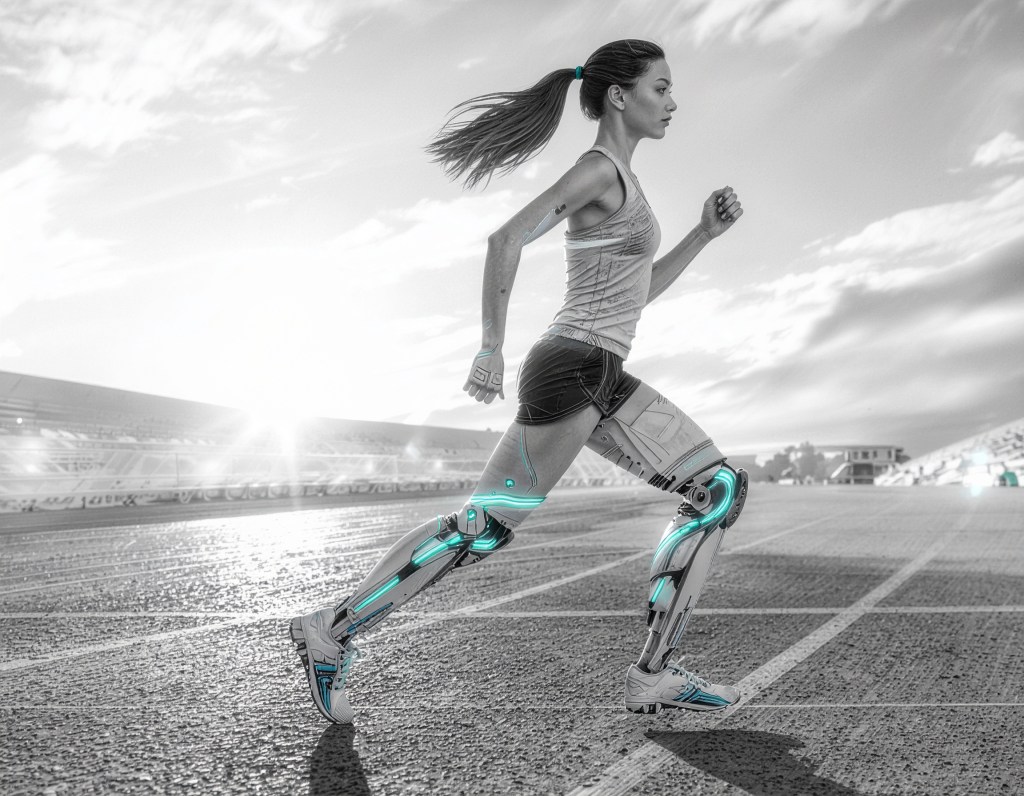
When we played The Thing from the Future in class, I got to try design fiction for myself. My cards gave me an arc with “growth future,” a terrain of something “related to implants,” and the object being “hobbies,” and I came up with the idea of bionic sports implants that could enhance athletic performance. What made the idea exciting for me was thinking about how it would actually look.
I imagined sleek, customizable devices that athletes could wear comfortably while also expressing their personal style. Adding that visual layer turned the concept from just an idea into something I could picture in real life. This experience made me realize how important design is in making imagined futures feel tangible.
I also used AI (Adobe Firefly) to illustrate my ideas and turn them into visuals, which was incredibly helpful for achieving exactly what I envisioned.
Why Visual Design Matters in Imagining the Future
Design fiction and visual design go hand in hand. Thinking about how spaces, products, or technology might look or behave in the future allows designers to test new ideas and bring abstract concepts to life. Visual design helps people imagine themselves living in those futures, making them easier to understand and relate to. Even if these ideas never become real, visualizing them gives people a way to explore what kind of future they might want to create.
Overall, design fiction is all about curiosity and imagination. It allows designers to look forward, experiment with ideas, and tell stories about what could be possible. Whether it appears in a movie, a classroom activity, or a creative project, design fiction reminds us that the future starts with an idea and grows stronger when we give it something to look like.
 A Master in the Making
Leave a comment