
Have you ever downloaded an app or bought a gadget only to wonder, “Who designed this?” because it just didn’t work for you? That frustration usually comes from one core mistake: ignoring the user during the product lifecycle. Today, building a successful product is not just about flashy features or clever marketing. The real winners are the ones who put users at the center from day one. Let’s explore how the product lifecycle and user-centered design connect and why overlooking this can turn a promising idea into a cautionary tale.
Before diving into the stages, it is important to understand why the product lifecycle matters for user-centered design. Every product moves from idea to adoption and eventually either declines or is renewed. At each stage, decisions should be guided by user insights and feedback. User-centered design provides a framework to make sure those decisions truly reflect what users need and expect.
User-centered design is the practice of keeping real users at the heart of every choice. Research from Maze shows that relying on actual user behavior rather than assumptions helps teams build features that solve real problems and improve satisfaction. This approach is essential because when decisions are based on guesswork, even well-intentioned features can fail to meet user needs and undermine the product’s success.
Listening Before You Build
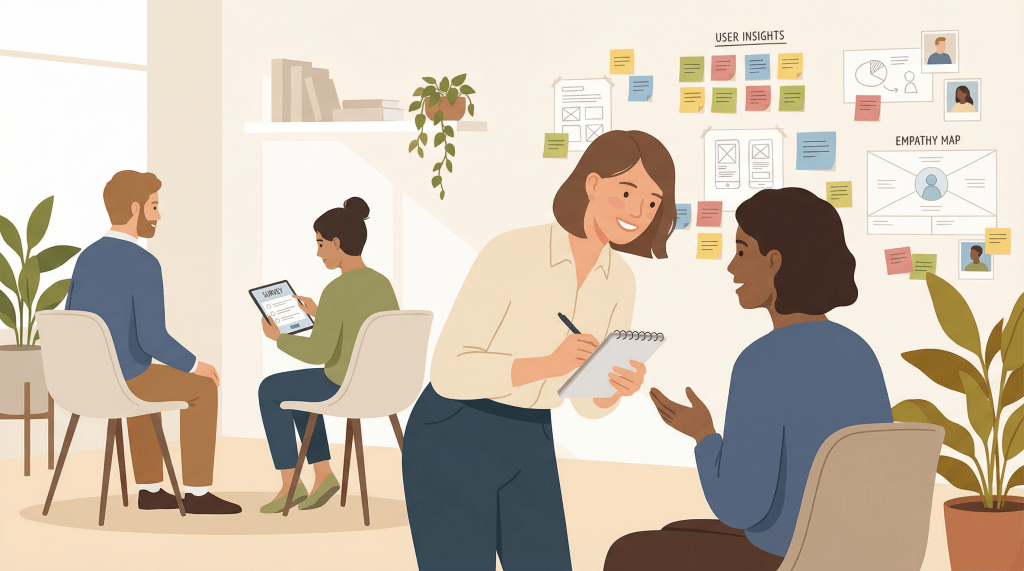
The first stage of the product lifecycle is all about discovery. This is where designers step back and ask themselves, Who are our users? What do they need? Where do they get stuck? Rather than jumping straight into design based on assumptions or what seems obvious, discovery is about immersing yourself in the user’s world to uncover the real problems they face.
Teams use a variety of research methods, including interviews, surveys, observation, and contextual inquiries, to gather a deep understanding of user goals, motivations, and pain points. This stage is not just about collecting data; it is about identifying patterns and understanding why certain behaviors occur, so that design decisions are grounded in evidence rather than guesswork.
One of the tools often highlighted in this phase is the Five Whys, which helps teams dig past surface-level complaints to uncover the deeper issues driving user frustration. As the Interaction Design Foundation explains, asking “why” repeatedly forces designers to challenge assumptions and see problems from a new perspective. For example, a user might say a form is confusing, but by repeatedly asking why, the team may discover that labels are unclear, instructions are inconsistent, or critical information is buried. These are issues that would not be obvious from the first observation.
The insights gathered at this stage form the foundation for design decisions in later stages, guiding prototypes, feature prioritization, and testing. Without a thorough discovery process, even a polished interface can fail because it solves the wrong problem or misses what users truly care about.
Learning From Real-World Use
Launching a product is often treated as the finish line, but in user-centered design it marks the beginning of the most valuable learning phase. Once a product is live and being used by real people in real contexts, designers gain access to insights that simply cannot be replicated in testing environments. Users interact with the product in unexpected ways, skip steps designers assumed were obvious, and prioritize features differently than anticipated. These behaviors reveal gaps between design intent and actual experience.
Post-launch data plays a critical role in shaping the next iterations of a product. Tools like analytics platforms, heatmaps, and in-app surveys help teams understand where users succeed, where they hesitate, and where frustration causes drop off. For example, analytics might show that users frequently abandon a task halfway through, while heatmaps reveal that important buttons are being overlooked entirely. This combination of qualitative and quantitative data allows teams to move beyond assumptions and focus on evidence-based improvements.
According to Moldstud, analyzing post-launch behavior helps teams identify which features truly provide value and which ones introduce unnecessary complexity. Rather than adding more functionality, designers can refine what already exists, simplifying workflows and addressing pain points that surface through real use. This continuous feedback loop ensures the product evolves alongside its users, improving over time instead of remaining static after launch.
Growth, Maturity, Renewal
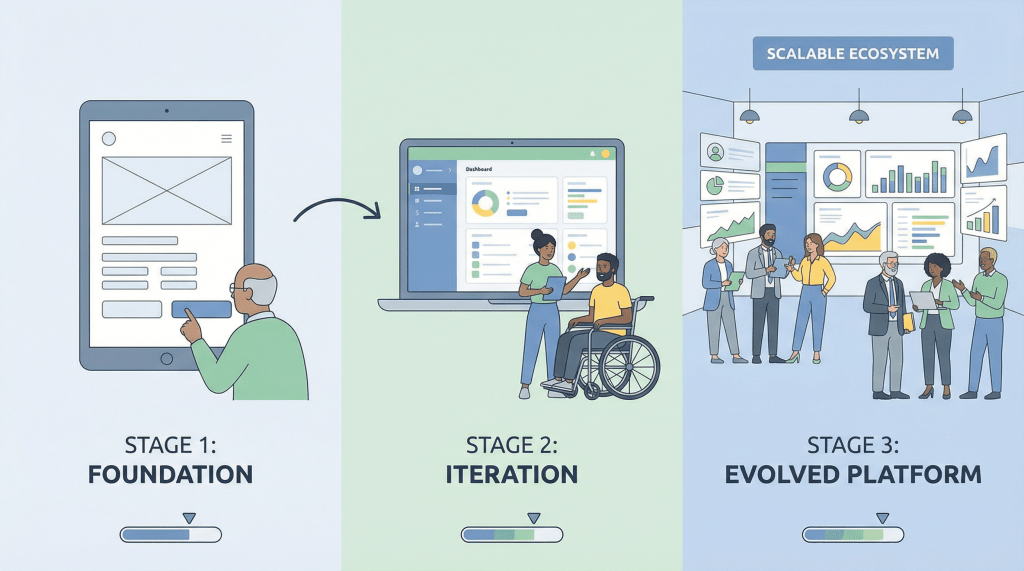
As a product grows, its audience expands and becomes more diverse. New users bring different expectations, behaviors, and levels of experience, which means the design must evolve without becoming confusing or overwhelming. During this stage, user-centered design focuses on refining the experience while maintaining clarity and consistency. The goal is not to add features for growth’s sake, but to ensure the product continues to support user needs as it scales.
Ongoing research and usability testing help teams determine which changes genuinely improve the experience and which introduce unnecessary complexity. By observing how users interact with new features over time, designers can make informed adjustments that strengthen usability and keep the product relevant. This continuous refinement helps prevent friction from accumulating as the product matures.
Eventually, user needs shift or the market changes, signaling a transition into renewal or decline. User-centered design plays a critical role in guiding this phase by grounding decisions in real behavior rather than assumptions. According to Microsoft’s startup blog, tracking long-term usage patterns allows teams to identify when a product needs to adapt, whether through redesign, feature updates, or a larger pivot. In some cases, this research may indicate that the product no longer serves its users effectively, making a thoughtful sunset the most user-respectful choice.
Spotify Case Study
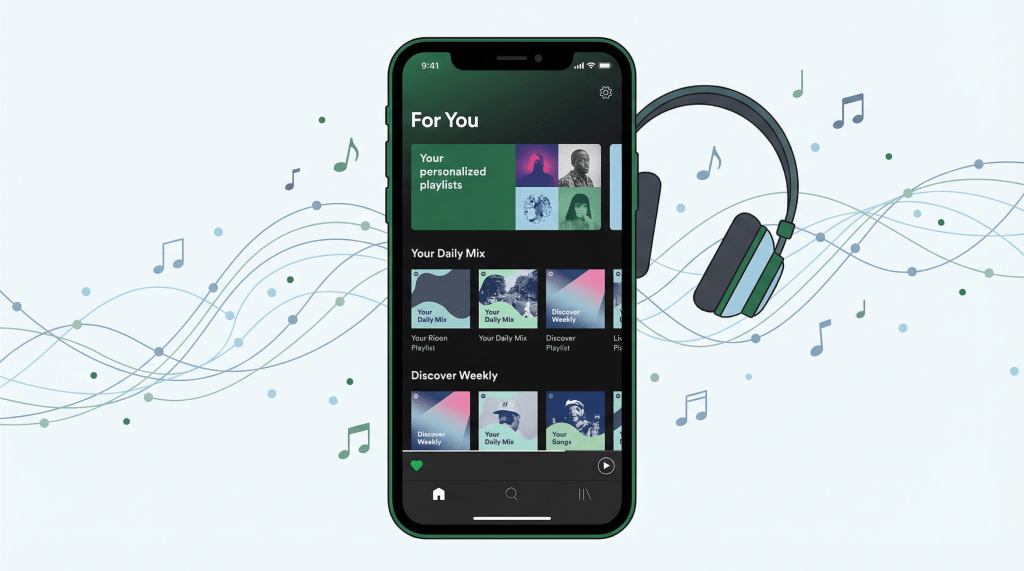
Spotify is a strong example of how user-centered design can guide a product through multiple stages of the lifecycle without losing relevance. As the platform grew, Spotify relied heavily on user behavior data to understand how people listened to music, when they discovered new artists, and what kept them coming back. Features like Discover Weekly were not just creative ideas but responses to clear patterns in listening habits. According to Moldstud, Spotify continuously refined these personalized playlists using feedback and usage data, which led to higher engagement and long-term retention. This case shows how listening to users during growth and maturity can turn a product into part of someone’s daily routine rather than just another app.
Spotify’s success reinforces the idea that user-centered design is not a one-time effort. It requires ongoing attention to user needs, especially as expectations evolve. By consistently grounding decisions in real behavior, Spotify was able to scale, adapt, and remain competitive without overwhelming its users.
Conclusion
The product lifecycle is a journey, not a checklist. When user research and testing are embedded at every stage, products become more meaningful, usable, and adaptable over time. From discovery to growth and eventual renewal, user centered design ensures that decisions are driven by real needs rather than assumptions.
Continuously listening to users allows products to do more than launch successfully. It helps them evolve, stay relevant, and build lasting relationships with the people they serve. The real question for designers and teams is simple. Are you designing with users at the center every step of the way, or are you relying on assumptions? The answer often determines whether a product quietly fades or becomes something users truly rely on.
 A Master in the Making
Leave a comment